
The language we use reflects and defines the way we think of the world we are part of. Speaking of the world as a set of resources to be used, facilitates a separation between humans and nature. A grammar of animacy can re-enchant the world we inhabit and promote a greater sense of care and solidarity between humans and the more-than-human world.
This is an entry in the Anarchist Bestiary, an ongoing project which shares stories that enable us to learn with and from other species, with the aim of building a world together in which all can thrive.
The bestiary is hosted on substack, on the Punk Ethnography website and as a podcast on Spotify.
Information
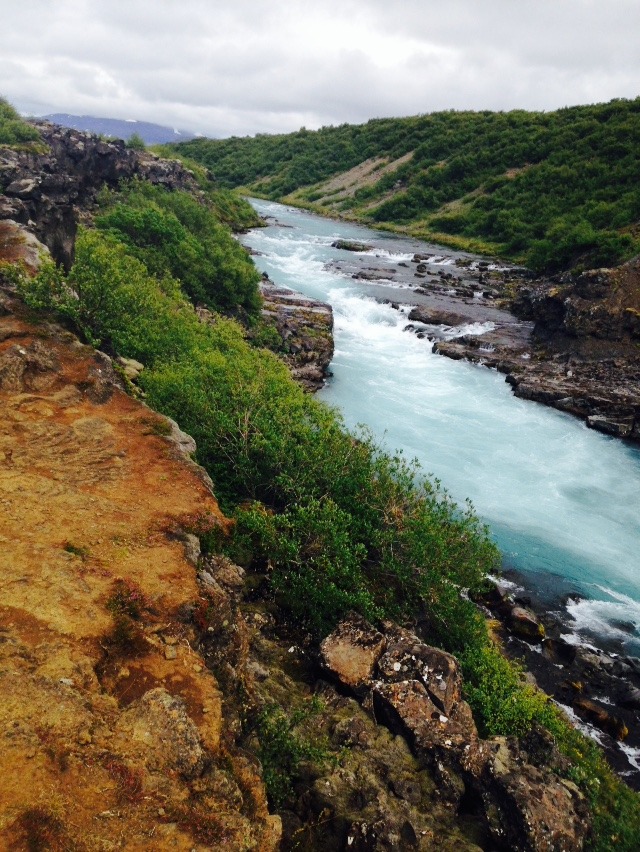
In his 2025 book author Robert Macfarlane asks a provocative question with the title: Is a river alive? He uses the question as an opening to a broad and lyrical discussion that takes in exploration of various rivers as well as the rights of nature debate, artistic engagement with nature and poetic reflections on the experience of being part of the natural world.
His purpose is not to debate whether rivers can be classified as alive as biological entities; rather he has a more capacious meaning in mind for what “aliveness” can connote.
He uses the contrast with a dead river to illuminate that aliveness, and he visits a river in Chennai which has been declared effectively dead by a recent report in India. Here the riverine ecosystem is degraded, shade trees lost, fish life gone, the river as a form of transport, a place to bathe and play are all lost and the river has become a carrier of disease and pollution through the country. This contrast between life and death applied to a river helps point to the vibrancy and sense of multi-species thriving that the idea of a river being alive might capture- to be something spirited and dynamic, something to which we might respond with respect and awe, gratitude and wonder and with which the lives of humans and many other species are intimately and vitally entwined.
This takes him to a consideration of what this kind of respect and acknowledgement might entail and specifically to the rights of nature movement which campaigns to give rights to animals, rivers, oceans, mountains and ecosystems. The Ouse which flows through Sussex, not far from where I live, has been recognised by Lewes District Council as having the right to flow, be free of pollution and to have a voice in decisions affecting it. This is a different kind of “aliveness” which is about agency and membership of a living community.
Through his journeys, Macfarlane considers the impact that travel on and with rivers has. The river offers healing to him and some of his companions who are struggling with loss. The pulsing animacy of the rivers brings solace, a sense of enchantment and hope and even a metaphor for a sense of wholeness through the changes, joys and tragedies of a human life. This is a sense of aliveness as relationality between human and river.
He reflects on the dynamic nature of rivers from a deep time perspective and how rivers constantly shape and are shaped by the world, changing course, transporting rocks and nutrients, enriching soils, scouring landscapes and altering environments.
Throughout the book he thinks about the language we use, and the way it frames rivers. He notes how differently we might think if we adopted a different language. For example if we talked about the river WHO flows through Lewes we might come closer to recognising rivers as in relationship with the other living beings in and around them.
He calls this a grammar of animacy, an idea popularised by botanist and author Robin Wall Kimmerer, particularly in her 2013 book Braiding Sweetgrass where she drew out the contrast between indigenous languages such as her ancestral Potawatomi, and English. The former uses verbs and personal pronouns to refer to rivers and mountains for example, whereas English uses nouns- static and fixed- and treats most of the natural world as an object using the pronoun “it”.
We can grasp the importance of this grammatical habit most easily perhaps in the incidences where we break them. Whilst most animals might be referred to as “it”, people will refer to pets, companion animals and other animals they are familiar with as “s/he” reflecting their closer and more caring relationship with them. The same can be seen in the naming and personalising of ships for example, and again the sense of care and interdependence is captured in the language.
In the final pages of the book Macfarlane gives an example of using verbs instead of nouns when he narrates, in language evoking the unending flow of the river, an experience that opens his imagination to the power and timelessness of the river. He speaks of being rivered, making a verb to capture the sense of openness and flow that becomes the very act of writing the book.
In addition to the use of personal pronouns instead of “it” and the use of dynamic verbs instead of static nouns a grammar of animacy would promote the use of language that foregrounds the agency of the more than human instead of treating it as a backdrop to human life. It would also involve avoiding oppression and objectification which is represented by language like vermin and weeds to categorise living things that do not suit our needs or words like meat or timber for living things that we only value when dead.
Macfarlane and Kimmerer are not arguing that rivers and mountains are alive in the manner of other biological entities, rather that they are part of a vibrant, dynamic, all-life-enhancing more-than-human world crucial to our mutual thriving and responsive to the level of care and respect we demonstrate. Our language is a valuable register of, and prompt to that care.
Insurrection
The focus of this piece is the use of language when we engage with the more than human world, but the same kind of language use is a powerful mechanism of domination in human societies where it can be used to deny an oppressed group the characteristics displayed by the oppressor. Women can be classified as lacking the intelligence or leadership capabilities as men and defined as the weaker sex. Immigrants can be downgraded to being animals or cockroaches. We can see it when indigenous peoples are referred to as primitive- denied the status of civilisation. The language we use forms a grammar of oppression.The status of the oppressed is fixed as a noun, frequently denied even individuality- for example people seeking refuge in another land are referred to merely as part of a swarm or plague.
Our language captures the hierarchy in which the oppressed are caught and I want to make the point that dominance is embedded in our language both in hierarchies within human societies and between humans and the more than human world.
The term grammar of animacy, referring specifically to the linguistic mechanisms that infect the way we speak of nature, sets the scene for the exploitation of the more-than-human world. Animals for consumption have numbers and barcodes rather than names. They can be referred to as meat products rather than living beings with agency. Forests are reduced to acres of exploitable wood in the language of extractive capitalism. Mountains, rivers, fields, habitats, whole ecosystems become resources to be exploited, uninhabited lands to be claimed and a source of minerals to be extracted. There is a grammatical trick in the phrase: I am throwing this away. Away is treated as a destination that consigns the item to some kind of oblivion. We are finding to our great collective cost that there is no “away” and that all our greenhouse gas emissions, waste and pollution is still in our atmosphere, oceans and ecosystems.
The ultimate end of this process is commodification- the idea that we can put a price on the wood from a clearcut forest, the meat from a herd of cows, the water extracted from a river and the services humans derive from an ecosystem and hence see them all as interchangeable, tradeable objects. This fungibility is also the ultimate in depersonalisation and separation from place and relationship. A river for example is valued only for the water it provides to agriculture or as a repository for effluent and industrial waste, not as a vital’ ‘living’ entity in our shared world.
How can a grammar of animacy be used?
Let’s look at the ways Macfarlane and Kimmerer, as well as some other authors, are calling for us to both name and see the world differently.
Richard Powers in his 2018 novel The Overstory writes from the point of view of trees, down to the structuring of the book itself which begins with roots- nine short stories in which human protagonists have formative encounters with trees, moves on to a trunk in which the characters come together in an effort to save a tree in an ancient wood, and concludes with the crown of the tree in which their lives separate again. The book decentres the human story, allowing the lives and dramas of its human protagonists to play out within the longer timespan and different lifeworld of trees.
One of the protagonists in The Overstory is a scientist modelled on Suzanne Simard, who was responsible for describing the fungal networks that mediate communication throughout forests, a discovery narrated in her 2021 memoir Finding the Mother Tree. The Mother Tree is language she uses to describe agency in trees and the way in which they communicate and care for each other through providing nutrients. She writes:
“Plants are attuned to one another’s strengths and weaknesses, elegantly giving and taking to attain exquisite balance.” p.327
Hungarian Nobel prize winning author László Krasznahorkai published a novel in 2024 called A mountain to the north, a lake to the south, paths to the west, a river to the east. In it, the human viewpoint is just one of many. The story, based around a deserted Japanese monastery, centres the point of view of winds and trees, the woodwork of the temple and a dying dog for different chapters. The rhythm and structure of the book draw the reader into a very different view of the world where dramas and concerns of human life are decentred and everything in the world becomes a potential subject.
The novel Helm published in 2025 by Sarah Hall tells a story from the point of view of a wind in the Lake District in England. Grammatically she avoids objectifying Helm- the only named wind in England- allowing Helm to be a subject whose perspective then becomes one we are all invited to use to view human concerns and history. She grants Helm a kind of personhood, which links with the work Macfarlane is doing with rivers.
To attribute a kind of personhood to a wind or a river is to make the very idea of personhood more capacious. To recognise the interdependence that is the root of mutual thriving and to suggest a kind of respect and care that should attend the recognition of kinship or fellow personhood.
In Braiding Sweetgrass, Robin Wall Kimmerer offers the pronoun “ki” as a replacement for “it” to create a sense of personal kinship with the living world. She encourages us to save “it” for the human-made world. She asks us to imagine watching our grandmother at the stove cooking and pointing at her and saying: “look, it is making soup!” The sense of foolishness is palpable, but more so is the disrespect inherent in the statement. It is clear how it becomes easier to harm, exploit and disregard someone once you have rendered them as an “it”. So the reverse process comes into focus- to render the river as a “who”, to find ourselves asking: “who is this river?” This puts us in dialogue with the river, enables us to think about what the river needs, what relationships and exchanges we have with the river, what we can learn from and give to them.
Language can objectify, can render the more-than-human world as a site for exploitation. Acknowledging the agency and animacy of the world we inhabit enriches our lives, and encourages the kind of mutual aid and solidarity that is essential to futures in which we all thrive. A grammar of animacy decentres the human and challenges human dominance and hierarchy. It encourages us to attend to the dynamism, agency and richness of the more-than-human world. This change of language is an invitation to a more integrated relationship between humans and the more-than-human world.
Inspiration
Macfarlane, R. (2025). Is a river alive? Hamish Hamilton.
For more information about Robert McFarlane’s work see https://mothlife.org/about/
And for a different kind of enchantment listen to some of the work of spell songs, a folk music project for which he provides the lyrics. https://www.thelostwords.org/
Kimmerer, R. W. (2013). Braiding sweetgrass: Indigenous wisdom, scientific knowledge and the teachings of plants. Milkweed Editions.
For more information on her work see her website here:
Powers, R. (2018). The overstory. W. W. Norton & Company.
Krasznahorkai, L. (2022). A mountain to the north, a lake to the south, paths to the west, a river to the east (O. Mulzet, Trans.). New Directions.
Simard, S. (2021). Finding the mother tree: Discovering the wisdom of the forest. Alfred A. Knopf.
Hall, S. (2025). Helm. Faber & Faber.


